


I’m Josie, the Remodeling Designer and Office Manager here at AP. At 21, I’ve grown up around construction and design, and now I have the privilege of leading our creative process and connecting with clients to bring their dream spaces to life. I also create 3D renderings for our client projects to help them visualize the finished design before we even begin. On top of that, I manage our marketing and social presence—so if you’ve seen our work online, I probably had a hand in sharing it!
My roots run deep in Jacksonville, but my story is also shaped by my family’s journey. My parents immigrated from Albania and now work alongside me every day. Together, we’ve built more than just beautiful homes—we’ve built a company grounded in hard work, integrity, and a genuine love for what we do.
Insights by category
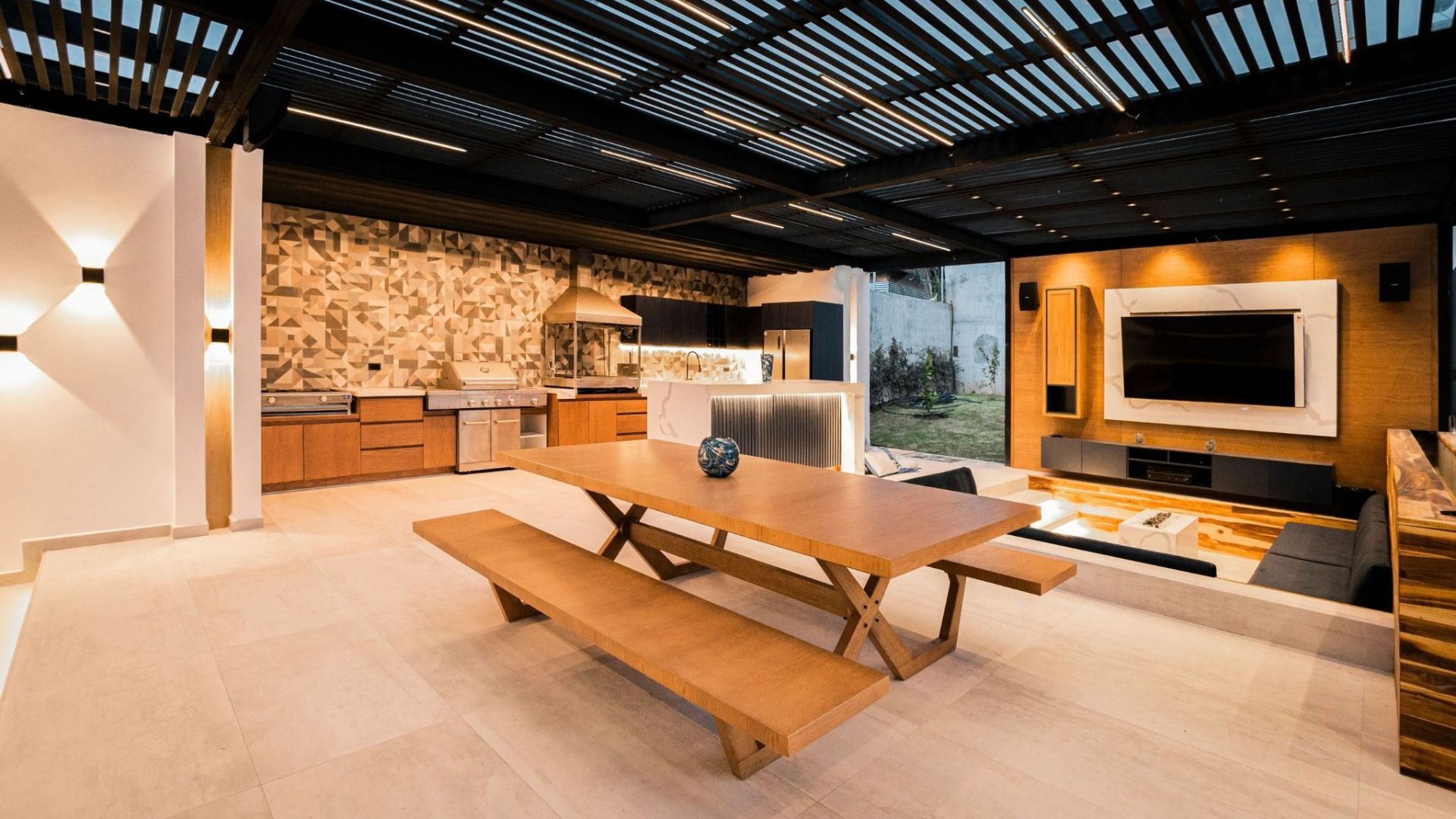
An outdoor kitchen turns backyard entertaining into an actual extension of your home, rather than a grill parked on the patio.
In Northeast Florida, where outdoor living is possible most of the year, building an outdoor kitchen tends to pay off fast in how the space actually gets used. The challenge is that making an outdoor kitchen involves more decisions than most homeowners expect, from what materials survive Florida humidity to whether you need a permit for the gas line.
This guide covers what an outdoor kitchen installation really costs, the styles and designs that hold up here, the accessories worth budgeting for, and a step-by-step look at how the process actually goes.
How Much Does It Cost to Build an Outdoor Kitchen?
Outdoor kitchen costs in Northeast Florida depend on the size of the kitchen, appliances, finishes, utilities, and whether you’re adding a roof or other structure. A simple grill station costs far less than a fully equipped kitchen with plumbing, refrigeration, lighting, and covered seating.
Typical costs to budget for include:
- Basic grill island: $5,000 to $15,000
- Mid-range outdoor kitchen with a sink and refrigerator: $15,000 to $35,000
- Full outdoor kitchen with a roof, bar seating, or specialty appliances: $35,000 to $75,000+
- Gas line installation: $500 to $2,000
- Covered roof or pergola: $5,000 to $20,000+
Where you build can affect the budget too. A Jacksonville project may involve separate building, electrical, plumbing, or gas requirements depending on the design, while properties on Amelia Island can bring coastal or floodplain considerations into the planning. In St. Augustine’s historic districts, some exterior changes may also require historic review, and St. Johns County specifically recognizes summer kitchens in its permitting system.
Utility work is usually one of the biggest variables. A grill station may need little more than a gas or propane connection, while adding a sink, refrigerator, outlets, lighting, and other appliances brings plumbing and electrical work into the project.
Comparing other backyard upgrades? See our deck renovation cost and porch remodel cost guides. We also cover ways to finance home improvements if you prefer to spread out the investment.
Outdoor Kitchen Styles and Designs for Florida Homes
Outdoor kitchens in Northeast Florida can take on very different looks depending on the home, location, and materials you choose. The best design also needs to account for Florida’s humidity, sun, rain, and, near the coast, salt air.
Traditional Brick and Stone Outdoor Kitchens
Brick and natural stone create a more traditional look that works particularly well with established Jacksonville homes. Both can perform well outdoors when the materials and installation are suited to Florida’s climate.
Modern Outdoor Kitchens
Modern outdoor kitchens favor stainless steel, concrete countertops, and clean lines. Near the coast, appliances, hardware, and finishes should be selected with salt-air exposure in mind.
Coastal and Mediterranean Outdoor Kitchens
Stucco, warm tile, and lighter finishes give outdoor kitchens a coastal or Mediterranean feel that fits naturally with many homes in St. Augustine and Amelia Island. These designs can also carry architectural details from the house into the outdoor living area.
Rustic Outdoor Kitchens
Rustic kitchens bring in wood tones and more textured finishes. In Northeast Florida, weather-resistant composite or other exterior-rated materials can provide the look of wood without exposing natural lumber to constant humidity and moisture.
Covered vs. Open-Air Outdoor Kitchens
A covered kitchen beneath a pergola or lanai extension provides shade and protection from Florida’s frequent rain while helping shield appliances and finishes from direct exposure. An open-air kitchen can be simpler and less expensive to build, but materials and appliances need to be rated for sun, heat, and moisture.
★★★★★
“I enjoyed the selections provided in the showroom; the project was completed per budget and on time. Overall, I enjoyed the experience.” – Taulant Marra
Outdoor Kitchen Plans: What to Know Before Installation Begins
A well-planned outdoor kitchen starts with more than choosing a grill and countertop. Where you place it, which utilities you need, and how exposed the space is to Northeast Florida weather can all affect the design, cost, and permitting process.
- Choose the right location: Keeping the outdoor kitchen reasonably close to your home and existing utility connections can reduce the amount of gas, water, and electrical work required.
- Plan utilities early: Decide whether the grill will use natural gas or propane, where outlets and lighting are needed, and whether you want plumbing for a sink. Gas, electrical, and plumbing work may require permits and inspections depending on the project and jurisdiction.
- Account for Florida’s climate: Coastal properties in areas such as Amelia Island and St. Augustine need materials selected with salt-air corrosion in mind. Marine-grade stainless steel, weather-resistant cabinetry, and properly sealed surfaces can help the kitchen withstand Northeast Florida’s humidity, rain, and coastal exposure.
- Design for Florida wind loads: A roof, pergola, or other attached structure needs to meet applicable structural and wind-load requirements. Getting those details right during design can help prevent permitting issues that hold up construction. Our guide to common remodeling project delays explains other issues that can affect the schedule.
Making these decisions before construction begins gives the contractor a clearer plan for utilities, materials, permits, and structural work. It also means fewer expensive changes once the outdoor kitchen is already taking shape.
How to Build an Outdoor Kitchen, Step by Step
Choose a location and rough layout based on how you’ll use the space and where utilities already run.
- Decide on materials and design style before finalizing outdoor kitchen plans, since structure and cabinetry choices affect the utility layout.
- Plan gas, electrical, and plumbing runs together, rather than adding them one at a time.
- Pull permits for gas, electrical, plumbing, and any structural additions.
- Pour the pad or foundation and build the base structure or cabinetry frame.
- Install appliances, run utilities, and connect everything to code.
- Add countertops, finishes, and any covered structure.
- Finish with lighting, accessories, and a final inspection.
A good build sequence keeps finished work from having to be opened or redone later. Planning utilities, structural work, and permits before construction is especially important when the kitchen includes gas appliances, plumbing, or a covered outdoor living area.
Outdoor Kitchen Ideas and Accessories Worth Budgeting For
Beyond the grill itself, a few accessories tend to get the most use.
A side burner handles sauces and sides without tying up the grill.
An outdoor refrigerator or ice maker keeps drinks and ingredients close by instead of trips inside.
Storage drawers keep tools and utensils dry and out of the weather.
A vent hood matters more than people expect if the kitchen sits under a covered structure, since smoke needs somewhere to go.
Task lighting over the cooking surface and ambient lighting for the seating area both make the space usable well past sunset, and a weatherproof TV or sound system is a common add-on for anyone building around a bar or entertaining area.
DIY or Hire a Pro for Building an Outdoor Kitchen?
A simple freestanding grill station or basic island may be manageable for an experienced DIYer, particularly when no new utilities or structural work are involved. Once the design calls for a new gas line, electrical circuit, plumbing, permanent structure, or covered roof, professional installation becomes much more important.
Permitting also varies across Northeast Florida. Jacksonville processes applicable building and trade permits through JaxEPICS, while St. Johns, Clay, and Nassau counties have their own permitting requirements. On Amelia Island, coastal and flood-zone conditions may affect some projects, while exterior work on certain properties in St. Augustine’s historic districts can require additional review.
For an outdoor kitchen involving several trades, choosing a home remodeler who understands Northeast Florida permitting, wind requirements, and coastal conditions can make the project much easier to coordinate from design through final inspection.
Ready to Build Your Outdoor Kitchen? Work With AP Advanced
An outdoor kitchen should feel like a natural extension of your home, not a collection of appliances added to the patio. With our outdoor kitchen installation services, AP Advanced brings the design, construction, utilities, and permitting together under one team, so every part of the space is planned to work together from the start.
Before construction begins, we create a 3D model so you can see how the layout, cabinetry, appliances, and finishes will look in your space and make adjustments before we build. From there, we coordinate the gas, electrical, and plumbing work, custom cabinetry, covered structures, permitting, and required inspections through completion.
Schedule a free consultation or visit our Jacksonville showroom to start planning your space. We build outdoor kitchens for homeowners in Jacksonville, Amelia Island, Clay County, St. Augustine, and St. Johns.
Frequently Asked Questions
Still deciding what your outdoor kitchen should include? These answers cover a few practical questions Northeast Florida homeowners often have before committing to a design.
How long does it take to build an outdoor kitchen in Florida?
A straightforward outdoor kitchen may take a few weeks, while a larger project with plumbing, gas, electrical work, custom cabinetry, or a covered structure can take longer. Permitting, inspections, material lead times, and weather can also affect the schedule.
How far should an outdoor kitchen be from the house?
There is no single distance that works for every property. The layout should account for utility connections, ventilation, heat from the grill, manufacturer-required clearances, and how easily you want to move between the indoor and outdoor kitchens. Keeping the space reasonably close to existing utilities can also reduce construction costs.
Can you build an outdoor kitchen on an existing patio?
Often, yes, but the existing patio needs to be evaluated for its condition, dimensions, and ability to support the planned kitchen. A heavy masonry island, roof structure, or other substantial addition may require more preparation than a lightweight grill station.
Can I use indoor appliances in an outdoor kitchen?
Generally, appliances installed outdoors should be specifically rated for outdoor use. Outdoor refrigerators, ice makers, grills, and other equipment are designed to withstand greater exposure to heat, humidity, and moisture than standard indoor appliances, which is particularly important in Northeast Florida.
How do I protect an outdoor kitchen from Florida hurricanes?
Outdoor kitchens should be designed with Florida weather in mind from the beginning. Permanent roofs and structures need to meet applicable wind-load requirements, while appliances, cabinetry, and loose accessories should be secured or protected according to their installation requirements and manufacturer guidance.
Does an outdoor kitchen add value to a Florida home?
It can, particularly when the kitchen creates usable outdoor living space and complements the home rather than overwhelming the backyard. The actual return depends on the property, neighborhood, design, and quality of construction. For more on projects that can improve resale appeal, see our guide to home renovations that add value.