


I’m Josie, the Remodeling Designer and Office Manager here at AP. At 21, I’ve grown up around construction and design, and now I have the privilege of leading our creative process and connecting with clients to bring their dream spaces to life. I also create 3D renderings for our client projects to help them visualize the finished design before we even begin. On top of that, I manage our marketing and social presence—so if you’ve seen our work online, I probably had a hand in sharing it!
My roots run deep in Jacksonville, but my story is also shaped by my family’s journey. My parents immigrated from Albania and now work alongside me every day. Together, we’ve built more than just beautiful homes—we’ve built a company grounded in hard work, integrity, and a genuine love for what we do.
Insights by category
Choosing outdoor kitchen materials in Northeast Florida means designing for more than appearance. Heat, humidity, heavy rain, intense sun, and salt exposure near the coast can all shorten the life of materials that perform perfectly well indoors or in drier climates.
The right choice also depends on where you live. An outdoor kitchen near the coast on Amelia Island or in St. Augustine may need greater corrosion resistance, while Jacksonville, St. Johns, and Clay County homes still need materials built for year-round humidity, rain, and UV exposure.
This guide compares the best materials for outdoor kitchen frames, cabinets, countertops, and finishes so you can choose what makes sense for your home. If you’re still working out the overall layout, our guide to making an outdoor kitchen covers costs, designs, accessories, and the build process.
Comparing the Best Materials for Outdoor Kitchens
There is no single material that works best for every part of an outdoor kitchen. This quick comparison shows where the main options tend to make the most sense:
| Material | Best for | Florida performance | Relative cost |
| Concrete block (CMU) | Frames | Excellent | $ |
| 316 stainless steel | Coastal cabinetry | Excellent | $$$ |
| 304 stainless steel | Cabinetry | Very good | $$ |
| HDPE | Cabinetry | Excellent | $$ |
| Granite | Countertops | Excellent | $$ |
| Porcelain slab | Countertops | Excellent | $$$ |
| Stucco | Facades | Very good with proper installation | $ |
| Natural stone veneer | Facades | Excellent | $$$ |
In practice, a durable Northeast Florida outdoor kitchen will often combine several materials rather than rely on one throughout. Masonry framing, stainless or HDPE cabinetry, a granite or porcelain countertop, and an exterior finish that complements the home can each serve a different purpose.
Best Materials for Outdoor Kitchen Frames in Florida
The frame is the structural core of an outdoor kitchen, so it needs to support the cabinetry, countertops, appliances, and finishes while standing up to Florida moisture. The most practical options for Northeast Florida include:
- Concrete block (CMU): A durable choice for Florida outdoor kitchens that will not rot and works well beneath stucco, stone, and tile finishes. Proper construction and moisture management are still important because concrete masonry is porous.
- Galvanized or coated steel framing: Lighter than masonry and useful when the design calls for a slimmer profile. Exterior-rated, corrosion-resistant framing is important in Florida’s humid climate.
- Marine-grade polymer framing: Designed for wet and humid environments and resistant to rot and corrosion. It can cost more than traditional framing but offers another option for kitchens with significant weather exposure.
- Pressure-treated wood framing: More vulnerable to long-term moisture, humidity, and pest exposure than masonry, polymer, or appropriate metal systems, so proper protection and maintenance are especially important.
The best frame depends on more than price. It should be selected around the weight of the countertops and appliances, the finish material, the kitchen’s exposure, and the way the structure is being built.
Best Outdoor Kitchen Cabinet Materials for Florida Homes
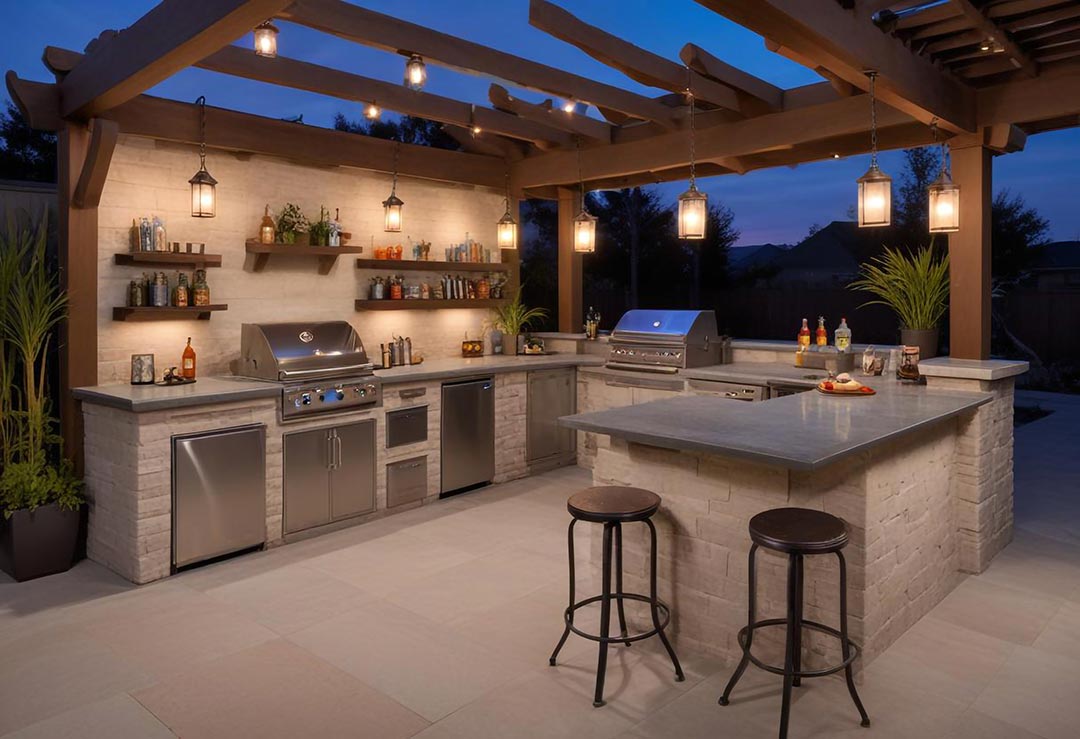
Cabinets face direct exposure to humidity, rain, heat, and UV light, while coastal properties add salt to the equation. For Northeast Florida outdoor kitchens, the main options include:
- 304 stainless steel: A corrosion-resistant option commonly used for outdoor cabinetry. It can work well in many locations, particularly where direct salt exposure is limited.
- 316 marine-grade stainless steel: Contains molybdenum, giving it greater resistance to chlorides and making it particularly useful for outdoor kitchens exposed to coastal salt air.
- High-density polyethylene (HDPE): A weather-resistant polymer that will not rust or rot and can provide a less industrial look than stainless steel.
- Exterior-rated wood cabinetry: Wood can provide a warmer appearance, but it requires careful species selection, finishing, installation, and ongoing maintenance in Northeast Florida’s climate.
For coastal homes around Amelia Island and St. Augustine, corrosion resistance deserves particular attention. Farther inland, humidity, rain, and UV exposure still make exterior-rated cabinetry important. For comparison, our guide to the best kitchen cabinet materials explains how material priorities change inside the home.
★★★★★
“They were very professional. They delivered everything as promised. They were very good at cleaning up also. We would definitely use them again!!!”
– Carol Batts
Best Outdoor Kitchen Countertop Materials
Outdoor countertops have to handle food preparation, hot cookware, spills, rain, UV exposure, and Florida temperature changes. That makes durability and maintenance just as important as appearance. Some of the strongest options include:
- Granite and other suitable natural stone: Dense, heat-resistant, and available in a wide range of finishes. Some natural stones require periodic sealing to reduce staining and moisture absorption.
- Concrete: Flexible in shape, texture, and color, making it a good fit for modern or custom designs. Proper sealing and maintenance help protect it from staining and moisture.
- Porcelain slab: Highly resistant to UV fading, staining, and scratching, making it a strong option for uncovered outdoor kitchens despite its higher upfront cost.
The right countertop ultimately depends on how exposed the kitchen will be and how much maintenance you want to take on. Our luxury countertop services include fabrication and installation for indoor and outdoor projects.
Best Materials for Outdoor Kitchen Facades
The facade gives the kitchen much of its architectural character, but it also needs to complement the frame underneath and withstand exterior exposure. Popular choices for Northeast Florida include:
- Natural stone veneer or brick: A durable, traditional finish that pairs naturally with many established Northeast Florida homes.
- Stucco: Particularly suited to coastal and Mediterranean-inspired designs common around St. Augustine and Amelia Island. The assembly beneath it still needs appropriate moisture protection.
- Exterior-rated tile: Offers more opportunities for color and pattern than brick or stone. Tile, setting materials, and grout should all be suitable for exterior use.
The facade is also an opportunity to connect the outdoor kitchen visually to the house. Repeating stone, brick, stucco, or other finishes already used on the exterior can make the new kitchen feel like part of the original design rather than a later addition.
Schedule a Free Appointment Today
Whether you’re starting a new remodel or looking to enhance an existing space, schedule a free consultation today, and let us help you bring your vision to life with precision and care.
Coastal vs. Inland Outdoor Kitchen Materials in Northeast Florida
Where your home sits in Northeast Florida should influence the materials you choose. Outdoor kitchens on Amelia Island and in coastal areas around St. Augustine face greater salt exposure, making corrosion-resistant hardware, fasteners, appliances, and cabinetry particularly important. Marine-grade 316 stainless steel can be worth considering in these environments because it offers greater resistance to chlorides than 304 stainless steel.
Homes farther inland in Jacksonville, St. Johns, and Clay County may have less direct salt exposure, but Florida’s humidity, rain, heat, and UV exposure still make exterior-rated materials important. Weather-resistant cabinetry, corrosion-resistant hardware, suitable masonry finishes, and countertops designed for outdoor use matter even away from the immediate coast.
The property’s actual exposure matters more than the city name alone. A sheltered kitchen farther inland faces different conditions from an uncovered kitchen near the Intracoastal or Atlantic, so materials should be selected for the individual site.
Outdoor Kitchen Materials to Avoid in Florida
Materials designed primarily for indoor use generally struggle outdoors in Northeast Florida. Untreated wood can swell, warp, rot, or develop mold with repeated moisture exposure, while standard carbon-steel hardware and fasteners are vulnerable to corrosion, particularly closer to the coast. Porous stone, masonry, and grout may also absorb moisture or stain when they are not properly finished and maintained.
That does not mean every component has to be marine-grade. The goal is to match the frame, cabinetry, hardware, countertops, and finishes to the amount of sun, rain, humidity, and salt exposure the kitchen will actually receive.
How to Choose Outdoor Kitchen Materials That Last
Material selection should happen while the outdoor kitchen is being designed, not after the layout is finished. The frame has to support the countertops and appliances, cabinetry has to work with the available openings and utilities, and exterior finishes need to be compatible with the structure underneath.
Location matters too. A covered outdoor kitchen in Clay County has different exposure than an open-air kitchen on Amelia Island, even if the two designs look identical on paper. Choosing materials around the actual property helps avoid paying for unnecessary upgrades in one location or using a product that is poorly suited to another.
For a project this material-dependent, choosing a home remodeler with experience building outdoor kitchens in Northeast Florida can help bring those structural, climate, and design decisions together from the start.
Build an Outdoor Kitchen With AP Advanced
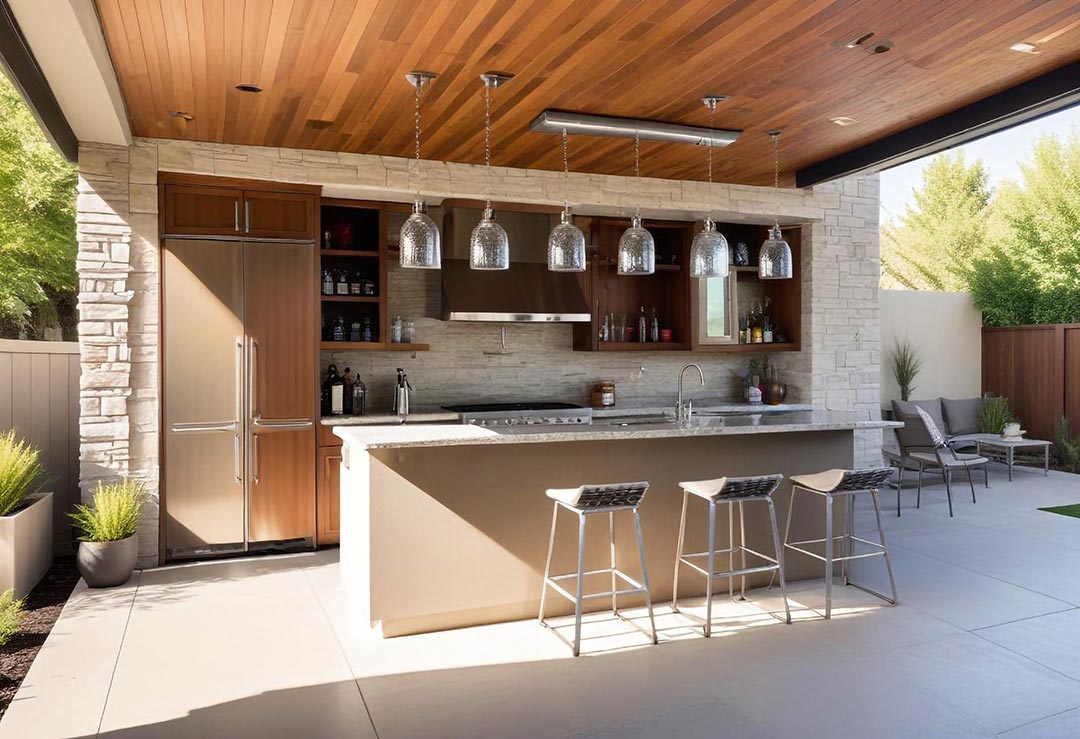
A good outdoor kitchen should still look and function the way you intended years after installation. With our outdoor kitchen installation services, AP Advanced helps you choose framing, cabinetry, countertops, hardware, and finishes based on your design, budget, and the conditions around your home.
Before construction begins, we create a 3D model so you can see how the materials, cabinetry, appliances, and overall layout work together and make changes before we build. Our team then coordinates the project through construction and installation.
For more information about budgeting, see our remodeling project costs breakdown or explore ways to finance home improvements.
Schedule a free consultation or visit our Jacksonville showroom. We build outdoor kitchens for homeowners throughout Jacksonville, Amelia Island, Clay County, St. Augustine, and St. Johns.

BBB Accredited Business

2024 Best of Houzz – Service

HomeAdviso Elite Service

2023 Best of Houzz – Service

HomeAdvisorTop Rated

2022 Best of Houzz – Service

Angi Super Service Award 2024

2025 Best of Houzz – Service
Frequently Asked Questions
Choosing the right outdoor kitchen materials often comes down to the conditions around your home and how much maintenance you want to take on. Here are a few other questions Northeast Florida homeowners often have when comparing their options.
Does stainless steel rust in Florida?
Stainless steel is corrosion-resistant, not corrosion-proof. Humidity, salt, chemicals, and lack of maintenance can eventually cause staining or corrosion. Coastal outdoor kitchens generally benefit from more corrosion-resistant grades such as 316 stainless steel, while routine cleaning remains important regardless of grade.
What is the best countertop for an uncovered outdoor kitchen in Florida?
Granite, porcelain, and properly finished concrete can all work outdoors, but the right choice depends on sun exposure, maintenance preferences, appearance, and budget. Porcelain is particularly resistant to UV fading and staining, while granite remains popular for its heat resistance and natural appearance.
How do I protect an outdoor kitchen from salt air in Florida?
Start with corrosion-resistant cabinetry, appliances, hardware, hinges, and fasteners, particularly for homes around Amelia Island, St. Augustine, and other areas with greater coastal exposure. Regularly cleaning salt residue from exposed metal surfaces can also help reduce corrosion.
What outdoor kitchen materials require the least maintenance?
HDPE cabinetry, stainless steel, and porcelain countertops are among the lower-maintenance options because they do not require the periodic sealing associated with many stone or concrete surfaces. They still need routine cleaning, particularly in coastal environments.
Can outdoor kitchen cabinets withstand Florida hurricanes?
Cabinet material alone does not determine whether an outdoor kitchen is prepared for severe weather. The way cabinetry, appliances, countertops, and structures are installed and anchored matters too. Removable accessories and other loose items should be secured before a storm, while permanent construction should comply with applicable Florida structural requirements.
How long do outdoor kitchen materials last in Florida?
There is no single lifespan because exposure, installation quality, maintenance, and material choice all matter. A covered kitchen farther inland may experience much less weathering than an uncovered coastal kitchen. Choosing exterior-rated materials for the property’s actual conditions is one of the best ways to extend the life of the finished space.