


I’m Josie, the Remodeling Designer and Office Manager here at AP. At 21, I’ve grown up around construction and design, and now I have the privilege of leading our creative process and connecting with clients to bring their dream spaces to life. I also create 3D renderings for our client projects to help them visualize the finished design before we even begin. On top of that, I manage our marketing and social presence—so if you’ve seen our work online, I probably had a hand in sharing it!
My roots run deep in Jacksonville, but my story is also shaped by my family’s journey. My parents immigrated from Albania and now work alongside me every day. Together, we’ve built more than just beautiful homes—we’ve built a company grounded in hard work, integrity, and a genuine love for what we do.
| Quick answer: For most Florida kitchens, quartz and porcelain slab are the most practical picks. Both resist heat, humidity, and stains with little upkeep. Granite remains the best value for natural-stone durability, marble and quartzite lead on luxury appeal, and laminate or butcher block fit tighter budgets but need more care in a humid climate. |
A well-designed kitchen island serves as the centerpiece of a modern culinary space. Whether used for food prep, casual dining, or entertaining guests, the surface material you choose affects more than looks. It shapes how the island holds up to Florida’s humidity and heat, how much upkeep it demands, and how well it protects your investment when it’s time to sell.
At AP Advanced, our kitchen remodeling services in Jacksonville and across Northeast Florida, including full countertop installation, ensure that every element, from your island to your layout, works in harmony to create a space that’s both beautiful and functional.
In this guide, we’ll explore 20 kitchen island countertop materials suitable for various price points, lifestyles, and design preferences. From budget-conscious selections to luxury finishes, each material comes with its strengths, visual appeal, and maintenance requirements.
Kitchen Island Countertop Materials at a Glance
| Material | Durability | Maintenance | Heat Resistance | Stain Resistance | Luxury Appeal | Avg. Lifespan | Price Range (installed) |
| Granite | Very high | Seal every 1-2 years | Excellent | Good once sealed | High | 25+ years | $40-$100/sq ft |
| Quartz | Very high | None, wipe clean | Moderate, avoid direct heat | Excellent | High | 25-30 years | $50-$120/sq ft |
| Marble | Moderate | Frequent sealing, avoid acids | Good | Poor, etches easily | Very high | 20-40 years | $60-$150+/sq ft |
| Butcher Block | Moderate | Oil regularly | Poor | Poor if unsealed | Moderate | 10-20 years | $30-$70/sq ft |
| Stainless Steel | High | None, wipe clean | Excellent | Excellent | Moderate | 20-30 years | $75-$150/sq ft |
| Concrete | High | Seal annually | Good | Good once sealed | High | 20+ years | $65-$135/sq ft |
| Soapstone | High | Oil occasionally | Excellent | Good | High | Lifetime | $70-$120/sq ft |
| Laminate | Low to moderate | None, but can’t repair | Poor | Good | Low | 10-15 years | $20-$50/sq ft |
| Tile | Moderate | Reseal/regrout grout | Good | Good (grout is weak point) | Low to moderate | 15-20 years | $20-$50/sq ft |
| Glass | Moderate | None structurally | Good | Excellent | Moderate to high | 15-20 years | $50-$100/sq ft |
| Reclaimed Wood | Moderate | Oil/seal regularly | Poor | Poor if unsealed | Moderate | 10-20 years | $40-$80/sq ft |
| Acrylic Solid Surface | Moderate to high | None, resurface if scratched | Poor to moderate | Excellent | Moderate | 15-25 years | $45-$100/sq ft |
| Quartzite | Very high | Seal annually | Excellent | Good once sealed | Very high | 25+ years | $70-$150/sq ft |
| Porcelain Slab | High | None, wipe clean | Excellent | Excellent | High | 20-30 years | $50-$120/sq ft |
| Zinc | Moderate | None, patinas naturally | Good | Moderate | Moderate to high | 20+ years | $75-$150/sq ft |
| Granite Composite | Very high | None | Excellent | Excellent | Moderate | 25+ years | $50-$100/sq ft |
| Copper | Moderate | None, patinas naturally | Excellent | Moderate | High | 20+ years | $100-$200/sq ft |
| Epoxy Resin | Moderate | Reapply coating periodically | Poor | Good | Moderate | 5-15 years | $40-$100/sq ft |
| Terrazzo | High | Seal periodically | Good | Good once sealed | Moderate to high | 20+ years | $60-$150/sq ft |
| Lava Stone | Very high | None | Excellent | Excellent | Very high | Lifetime | $150-$300/sq ft |
*Prices are typical installed ranges and will vary by slab grade, edge profile, and fabrication complexity.
1. Granite: Classic Durability with Natural Variation
Granite remains one of the most popular materials for kitchen islands due to its strength and unique appearance. Each slab features natural veining and color variation, offering a one-of-a-kind style. It resists heat and scratching but requires periodic sealing to prevent staining. Ideal for traditional or transitional designs needing long-term performance.
2. Quartz: Engineered Elegance and Low Maintenance
Quartz countertops are made by combining crushed natural stone with resin, resulting in a durable, non-porous surface. Unlike natural options, quartz offers consistency in color and pattern. It resists stains, doesn’t require sealing, and holds up under heavy use—a top contender for the best material for kitchen island countertops in busy family homes.
3. Marble: Sophisticated Appeal with Subtle Veining
Marble delivers unmatched luxury through its soft veining and luminous surface. It suits upscale kitchens or baking zones where cool surfaces are ideal. It scratches and etches easily and needs frequent resealing in Florida’s humidity, making it a high-maintenance choice best suited to decorative or secondary island tops rather than the main prep surface in a busy family kitchen.
4. Butcher Block: Warm, Inviting, and Practical
Wood countertops made from maple, oak, or walnut add warmth and natural texture. Butcher block suits farmhouse and transitional kitchens while providing a soft surface for prep work. Regular oiling prevents drying or cracking, and it’s especially important here, since Florida humidity makes unsealed wood prone to swelling and warping. It’s an affordable, renewable choice, but not one we recommend for outdoor kitchens.
5. Stainless Steel: Industrial Strength and Hygiene
Stainless steel countertops offer a sleek, modern surface that’s non-porous and easy to disinfect. Common in commercial kitchens, it withstands heat, water, and frequent use without fading in UV, which makes it one of the better choices for an outdoor kitchen. Fingerprints and water spots show up quickly with Florida’s hard water, and scratches develop a patina over time.
6. Concrete: Bold, Customizable, and Textural
Concrete countertops bring raw, industrial charm and allow full customization in shape, finish, and pigment. When properly sealed and resealed annually in a humid climate, they resist moisture and stains well. Their weight requires reinforced cabinetry, and hairline cracks may form over time, a tradeoff worth accepting for homeowners who want a modern, artistic surface.
7. Soapstone: Subtle Beauty and Chemical Resistance
Soapstone features soft, matte veining and darkens naturally with age. It resists heat, acids, and staining, and its density holds up well to Florida’s humidity without frequent sealing, just an occasional mineral oil application. Unlike harder stones, it may nick or dent slightly but can be sanded smooth. A timeless, low-drama option for homeowners who like a material that ages gracefully.
8. Laminate: Economical and Versatile
Laminate surfaces consist of plastic layers bonded over particleboard, offering an affordable variety in texture, color, and pattern. While not as heat- or scratch-resistant as stone, modern laminates convincingly replicate the appearance of wood, marble, or granite. Ideal for budget-conscious renovations or short-term solutions where cost efficiency is a top priority.
9. Tile: Customizable Design and Affordable Material
Ceramic or porcelain tile countertops offer creative freedom in terms of color, pattern, and layout. Tiles resist heat and can be replaced individually if damaged. However, grout lines require regular upkeep to prevent staining or mold growth. Well-suited for retro or Mediterranean-style kitchens with an emphasis on color and personalization.
10. Glass: Clean, Contemporary, and Reflective
Tempered glass countertops offer a smooth, modern finish with high visual impact. They’re resistant to heat and staining but show fingerprints and smudges easily. Available in clear, frosted, or back-painted styles, glass works well in minimalist kitchens where clean lines and light reflection enhance space.
11. Reclaimed Wood: Eco-Conscious and Textured
Reclaimed wood adds historic character and sustainability to kitchen islands, enhancing their aesthetic appeal and environmental impact. Each plank carries signs of age, creating a tactile, lived-in feel. Requires sealing to protect against moisture and food spills—an excellent option in mixed-material kitchen island configurations, paired with stone or metal for added contrast.
12. Acrylic Solid Surface: Seamless and Repairable
Solid surface materials, such as Corian, consist of acrylic and natural minerals, allowing for seamless joins and integrated sinks. They’re stain-resistant, non-porous, and easy to resurface if scratched. While less heat-resistant than stone, solid surfaces offer clean aesthetics and customizability—a reliable, mid-range solution for contemporary kitchens.
13. Quartzite: Natural Stone with High Durability
Often confused with quartz, quartzite is a natural stone known for its extreme hardness and crystalline appearance. It resists heat, scratches, and UV damage, making it suitable for islands exposed to direct sunlight. More expensive than granite but equally durable, quartzite strikes a balance between elegance and rugged performance.
14. Porcelain Slab: Ultra-Compact Surface with Modern Appeal
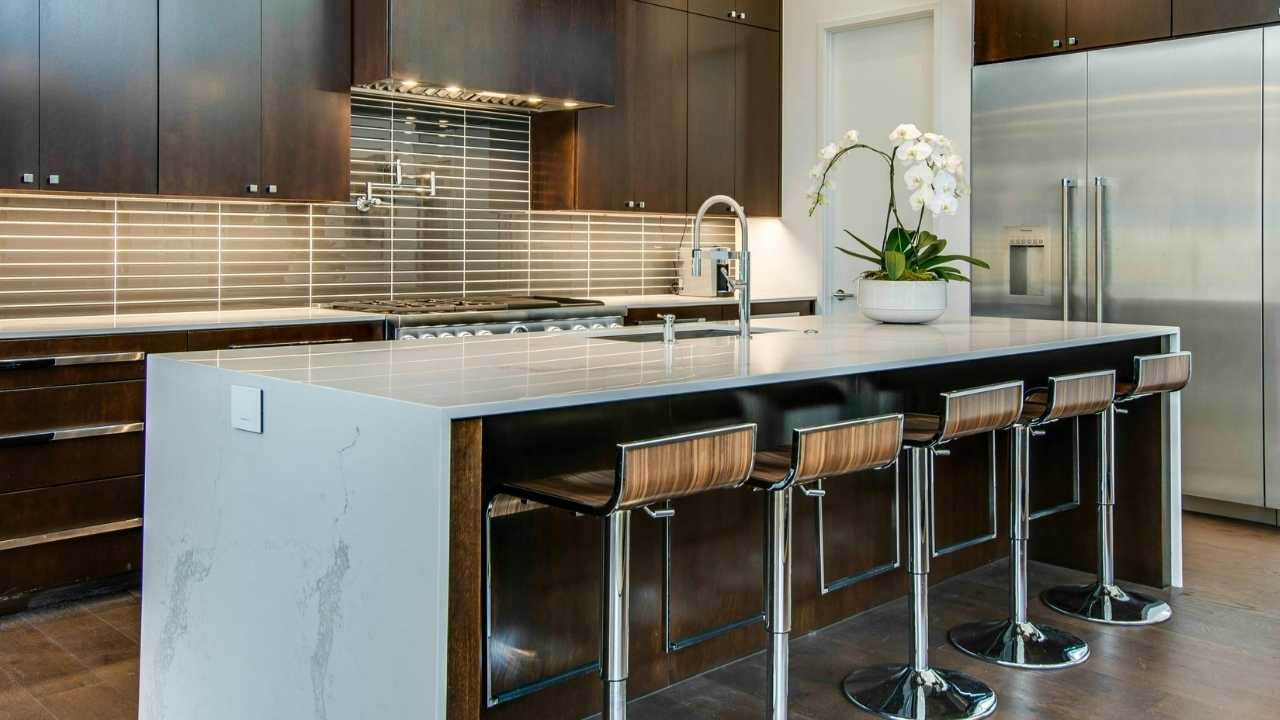
Porcelain countertops are crafted from dense, fired ceramic, often printed to resemble the appearance of marble or concrete. They’re ultra-thin, lightweight, and incredibly heat- and scratch-resistant. Ideal for waterfall island designs or sleek, contemporary spaces. Minimal maintenance and bold looks make it a rising star among kitchen island countertop materials.
15. Zinc: Living Surface with Organic Aging
Zinc countertops develop a natural patina over time, transitioning from a bright silver to a warm gray-blue hue. Used often in Parisian kitchens and vintage-inspired homes, zinc is antimicrobial and food-safe. It scratches easily but adds character. Works best in designs where aging surfaces complement rustic or old-world aesthetics.
16. Granite Composite: Engineered Strength for High-Traffic Use
Granite composite materials mix natural stone with resin, forming a dense, non-porous surface. Used in both sinks and countertops, they provide resilience against scratches, stains, and heat. Available in matte finishes and dark tones, they suit families needing functional surfaces that don’t compromise on visual appeal.
17. Copper: Warm-Toned Metal with Antimicrobial Benefits
Copper countertops offer a reddish-gold tone that darkens beautifully over time. Naturally antimicrobial and heat-resistant, copper surfaces develop a unique patina in each space. They scratch and dent easily, but for some, that’s part of their charm. Ideal for vintage or eclectic island applications.
18. Epoxy Resin: High-Gloss and Artistic Flexibility
Epoxy-coated surfaces can mimic the look of granite or marble, or feature completely abstract designs with high-gloss finishes. It resists stains well but is sensitive to heat, so hot pans need a trivet, and it’s best applied over wood or laminate cores. Suited to custom designs and DIY remodels, with occasional reapplication needed to keep the finish clear.
19. Terrazzo: Decorative Aggregates with Modern Flair
Terrazzo combines chips of marble, glass, or quartz set in a cement or epoxy matrix, creating a multicolored, speckled surface. Durable and visually rich, it suits contemporary or retro interiors. Although more commonly used in flooring, terrazzo countertops bring a playful and personal touch to kitchen islands that seek a unique focal point.
20. Lava Stone: Glazed Surface with Rare Visual Impact
Lava stone countertops are hand-glazed and kiln-fired, producing a glossy, crackled surface that’s heat- and stain-resistant. Imported and handcrafted, they come at a premium but offer bold color options and artisanal craftsmanship. This is an exceptional choice for showpiece islands where artistry and performance come together.
Best Kitchen Island Countertop Materials by Priority
Busy families: Quartz, granite composite, and stainless steel handle daily wear with the least fuss, since none of them need a sealing schedule to stay protected.
Luxury aesthetics: Marble, quartzite, lava stone, and terrazzo create standout visual statements, and a waterfall-edge porcelain slab island has become a signature move in the kind of luxury home remodeling we do across Jacksonville and Northeast Florida.
Accessibility needs: Non-porous, low-maintenance surfaces like quartz and porcelain reduce the physical effort of upkeep, and a contrasting edge color helps with visibility for household members with low vision, the kind of detail covered alongside counter height and clearances in our ADA-compliant kitchen remodel guide, one piece of a broader accessible home remodeling plan.
Low maintenance: Quartz, porcelain slab, laminate, stainless steel, and granite composite all skip the sealing schedule entirely.
Resale value: Granite and quartz are still the two materials most buyers and appraisers recognize and expect, especially in a family-oriented market, one of several factors our kitchen renovation ROI guide breaks down in more detail.
Outdoor kitchens: Porcelain slab, granite, quartzite, soapstone, and stainless steel are built for direct sun and weather exposure. Laminate, butcher block, marble, and epoxy resin are not, and shouldn’t go outside, a distinction our outdoor kitchen design process accounts for from the start.
★★★★★
“Did a complete remodel of my condo kitchen, including taking down part of a wall, removing and replacing cabinets, new sink, new countertops and backsplash. Great communication, quick turnaround, and professional installation (I work from home, and they were always considerate of that fact). I highly recommend them.” – Tanya Gawarecki
Kitchen Island Countertop Maintenance Realities in Florida’s Climate
Sealing. Granite, marble, soapstone, concrete, and terrazzo need a sealant on a schedule, anywhere from every year to every few years depending on the stone, since porous stone and anything cement-based will absorb Florida’s humidity without it. Butcher block and reclaimed wood need regular oiling instead. Quartz, porcelain, quartzite, granite composite, stainless steel, glass, laminate, and acrylic solid surface need none of this and shrug off humidity on their own.
Scratching. Granite, quartzite, and soapstone hold up well against knives and daily wear. Quartz resists scratches but can chip at edges and sink cutouts under a hard impact. Wood scratches easily but sands out. Metal surfaces develop a visible scratch patina over time. Laminate scratches permanently, since there’s no surface layer to repair.
Chipping. Porcelain slab is the material most prone to edge chipping, simply because the slabs are thinner than stone. Quartz can chip at corners and cutouts under impact. Granite and quartzite resist chipping well. Good fabrication and installation reduce this risk significantly across every material.
Heat and sun exposure. Soapstone, quartzite, granite, porcelain, lava stone, and stainless steel all tolerate direct heat and Florida’s sun without issue. Marble holds up to moderate heat but can crack under a sudden extreme temperature swing. Resin-based surfaces, quartz, laminate, epoxy, and acrylic solid surface are the most heat-sensitive: keep them away from hot pans, and for quartz and epoxy specifically, away from years of direct sun near an unshaded window or outdoor kitchen, which can gradually discolor them.
Water resistance. Sealed natural stone, quartz, porcelain, quartzite, and stainless steel all resist water well. Butcher block and reclaimed wood need regular oiling to avoid water damage and warping. Laminate seams are the most vulnerable point for water infiltration. Concrete and terrazzo need consistent resealing to stay water-resistant in Florida’s humidity.
Cleaning. Seamless, non-porous surfaces are easiest to keep sanitary in a climate where mold and mildew take hold fast. Tile is the outlier, since its grout lines trap moisture and need more frequent sealing or regrouting here than up north, the same tradeoff you’ll run into with the grout on the floor beneath it, which our best kitchen flooring materials guide covers in more detail.
Skipping these maintenance steps is one of the more common kitchen remodel mistakes we see homeowners run into a few years after installation.
What Florida Contractors and Designers Usually Recommend
For busy family kitchens, contractors most often steer homeowners toward quartz or granite composite, since both balance durability and low upkeep without a sealing schedule to track. For luxury projects, designers frequently recommend quartzite or a marble-look quartz, which delivers the aesthetic homeowners want from real marble without its maintenance demands.
For outdoor kitchens specifically, contractors are quick to rule out laminate, butcher block, and resin-based surfaces in favor of porcelain slab, granite, or stainless steel, all of which are built to handle direct sun and weather.
At AP Advanced, we can guide you through material selection when you visit our showroom in Jacksonville, or reach out for a consultation to talk through what’s right for your Florida kitchen.
Make the Island the Heart of Your Kitchen Remodel at AP Advanced
A well-designed island can redefine your kitchen. At AP Advanced, we guide you through choosing the right island countertop while rethinking the entire layout to boost function and flow. Visit our Jacksonville showroom to explore material options, receive expert advice, and begin planning your comprehensive kitchen remodel with confidence.
Frequently Asked Questions
Below, we answer some of the most common questions we hear from homeowners in Northeast Florida who turn to our kitchen remodeling services.
Is quartz better than granite?
It depends on what you’re optimizing for. Quartz wins on maintenance, since it never needs sealing, and resists stains slightly better. Granite wins on heat resistance and offers natural variation quartz can’t fully replicate. The better choice usually comes down to whether you prioritize zero-maintenance living or natural stone character.
Do porcelain countertops crack?
Rarely under normal use. Porcelain slab is extremely hard and resists scratching, staining, and heat better than most materials on this list. The real risk is edge chipping or cracking from a hard, concentrated impact, since the slabs are thinner than stone. Professional fabrication and installation reduce that risk considerably.
Is marble too high-maintenance?
For a main prep surface in a busy kitchen, often yes. Marble etches from acidic foods and drinks and needs frequent resealing, especially in Florida’s humidity. Many homeowners still choose it for a secondary island, a baking station, or a decorative surface where the look outweighs the upkeep.
What countertop lasts the longest?
Quartzite, granite, soapstone, and lava stone are among the longest-lasting materials here, often holding up for decades with minimal degradation when properly sealed. Quartz and porcelain slab also perform well long-term, though quartz can discolor under prolonged heat or sun and porcelain carries more edge-chip risk. Laminate has the shortest realistic lifespan of the group.
Which countertops stain the easiest?
Marble is the most stain-prone material on this list. It’s porous and reacts to acid, so wine, citrus, and even vinegar can etch or discolor it within seconds if not wiped up quickly.
Unsealed granite, concrete, and terrazzo can pick up stains until properly sealed, and butcher block or reclaimed wood stains just as easily without regular oiling.
Soapstone, zinc, and copper develop a darker patina from oils and age, which most homeowners treat as character rather than damage.
Quartz, porcelain slab, granite composite, stainless steel, glass, and laminate all resist staining well under normal use.